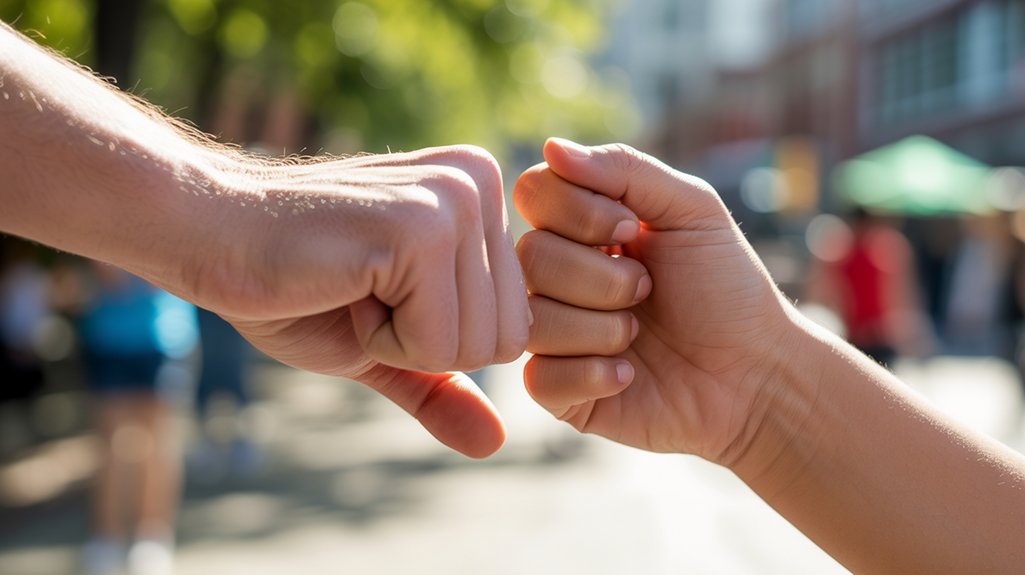
A fist bump from a guy typically represents casual friendship, professional acknowledgment, or boundary-setting behavior depending on context and relationship dynamics. The gesture serves as a modern alternative to handshakes, offering hygienic benefits while maintaining comfortable distance. Key indicators include timing, eye contact patterns, lingering touch duration, and accompanying body language cues that reveal whether the bump signals platonic respect, romantic interest testing, or workplace professionalism. Understanding these subtle variations provides deeper insight into his intentions.
The Basic Friendship Fist Bump
Most people recognize the fist bump as a simple greeting between friends, yet this seemingly basic gesture carries deeper social significance than many realize. When guys exchange fist bumps in casual settings, they establish a basic connection that communicates mutual respect and acknowledgment without the formality of handshakes or the intimacy of hugs. This playful gesture serves as a modern alternative to traditional greetings, particularly popular among younger demographics who view it as more relaxed and authentic.
Research indicates that fist bumps transmit fewer germs than handshakes, making them hygienically superior while maintaining social bonds. The brief contact duration and controlled force demonstrate restraint and consideration, signaling that both parties understand appropriate social boundaries within their friendship dynamic.
Signs of Romantic Interest Through Physical Contact
Physical contact between potential romantic partners often reveals unspoken attractions and intentions that verbal communication alone cannot convey. When analyzing fist bumps in romantic contexts, the gesture transforms from simple greeting to nuanced communication, carrying deeper meaning through subtle variations in execution and accompanying body language.
Research indicates that romantic gestures often begin with seemingly innocent physical contact, allowing individuals to test boundaries while maintaining plausible deniability. The fist bump serves this purpose effectively, bridging the gap between casual friendship and romantic interest.
| Contact Type | Romantic Indicator |
|---|---|
| Brief touch | Testing boundaries |
| Lingering contact | Increased interest |
| Eye contact during bump | Emotional connection |
| Hand positioning | Intimacy comfort level |
These subtle modifications distinguish romantic interest from platonic interaction, requiring careful observation of accompanying nonverbal cues.
Professional and Workplace Contexts
Corporate environments have transformed the traditional handshake dynamic, with fist bumps emerging as increasingly acceptable alternatives that navigate modern workplace etiquette while addressing practical concerns about hygiene and personal boundaries. In professional settings, men often use fist bumps to demonstrate professional respect while maintaining appropriate distance, particularly when celebrating project completions or acknowledging team achievements.
Research from workplace psychology experts indicates that fist bumps create workplace camaraderie without crossing personal space boundaries that formal handshakes might violate. During client meetings, men may offer fist bumps to establish rapport while appearing approachable yet professional. This gesture proves especially valuable in creative industries, startups, and tech companies where traditional formality has relaxed. However, context remains vital, as senior executives or conservative industries may still prefer conventional greetings over casual contact methods.
Cultural and Generational Differences in Greeting Styles
Generational divides reveal fascinating patterns in how different age groups perceive and utilize fist bumps as greeting mechanisms, with younger demographics embracing the gesture as natural communication while older generations often view it through lenses of informality or disrespect. Understanding these variations helps navigate social interactions across age groups effectively.
Cultural significance varies considerably across different communities and traditions:
- Baby Boomers typically prefer traditional handshakes, viewing fist bumps as casual or unprofessional
- Generation X shows mixed acceptance, adapting based on situational context and social environment
- Millennials readily embrace fist bumps as standard greeting customs in both casual and semi-formal settings
- Generation Z considers fist bumps completely normal, often preferring them over handshakes for hygiene reasons
These generational preferences reflect broader cultural shifts toward informal communication styles and evolving social norms.
Body Language Cues That Accompany the Gesture
The fist bump’s true meaning extends far beyond the simple collision of knuckles, as accompanying body language signals reveal deeper layers of social communication and emotional intent. Research indicates that eye contact patterns, facial expressions, and physical positioning during the gesture create a complex nonverbal dialogue that participants often interpret subconsciously. According to Dr. Albert Mehrabian’s communication studies, these visual cues account for approximately 55% of interpersonal message transmission, making them essential elements in understanding what each fist bump actually conveys.
Eye Contact Patterns
When people extend their fists for a bump, their accompanying eye contact patterns reveal essential information about the relationship dynamics, emotional state, and cultural context of the interaction. The eye contact significance during these exchanges provides vital nonverbal communication that often speaks louder than words themselves.
Research indicates that mutual gaze patterns during fist bumps follow predictable patterns:
- Direct sustained contact – Indicates confidence, respect, and genuine connection between participants, often lasting 2-3 seconds during the gesture.
- Brief glancing – Suggests casual acknowledgment or social obligation rather than meaningful relationship investment, typically under one second.
- Averted eyes – May signal discomfort, submission, or cultural deference, particularly common in hierarchical workplace settings.
- Delayed contact – Often reveals nervousness or uncertainty about the appropriateness of the physical gesture within the current social context.
Facial Expression Signals
Beyond eye contact patterns, facial expressions during fist bumps serve as powerful indicators of authenticity, revealing whether participants genuinely embrace the gesture or merely perform social obligations. Research demonstrates that micro-expressions, lasting mere milliseconds, often betray true intentions despite conscious attempts at concealment. Genuine fist bumps typically feature relaxed facial muscles, slight upward mouth corners, and crinkled eyes indicating sincere engagement.
Conversely, forced interactions display tension around the jaw, strained smiles that don’t reach the eyes, and brief flashes of discomfort. The emotional context becomes particularly evident through eyebrow positioning and forehead tension. According to behavioral psychologist Dr. Paul Ekman, “Facial expressions leak emotional truth regardless of social masks.” These subtle facial expressions provide vital insight into relationship dynamics, helping observers distinguish between authentic connection and polite performance within social exchanges.
Posture and Proximity
While facial expressions reveal emotional authenticity, the positioning and movement of the entire body during fist bump exchanges provide equally telling insights into relationship dynamics and social hierarchies.
Posture analysis reveals vital information about comfort levels and confidence during these interactions. Research indicates that body positioning communicates power dynamics more clearly than verbal exchanges alone.
Key proximity cues to observe include:
- Distance maintained – Close positioning suggests familiarity, while extended arm reach indicates formal boundaries
- Body orientation – Full frontal engagement versus angled positioning reveals comfort levels
- Height adjustments – Crouching or stretching demonstrates respect for physical differences
- Post-contact positioning – Lingering proximity versus immediate withdrawal signals relationship depth
These nonverbal elements create an extensive communication system, where spatial awareness and physical alignment work together to establish social connections beyond the simple gesture itself.
When Guys Use Fist Bumps to Maintain Distance
Men frequently employ fist bumps as a strategic tool to establish and maintain emotional or physical boundaries in various social contexts. This gesture allows them to acknowledge others while simultaneously creating a comfortable distance, particularly in professional settings where more intimate contact might be inappropriate. The fist bump serves as a socially acceptable middle ground between complete avoidance and closer physical gestures, enabling men to navigate relationships without crossing personal comfort zones.
Avoiding Physical Intimacy
How does a simple fist bump become a strategic barrier against deeper emotional connection? When men utilize fist bumps consistently, they often establish physical boundaries that signal their preference for maintaining emotional distance. This seemingly innocent gesture can function as a protective mechanism, allowing men to engage socially while avoiding the vulnerability that closer physical contact might invite.
The psychology behind this behavior reveals several key patterns:
- Controlled contact – Fist bumps limit physical interaction to a brief, non-intimate touch
- Safe socialization – Men can participate in greetings without emotional risk
- Masculine preservation – Traditional gender roles encourage emotional restraint through distant gestures
- Relationship regulation – Physical boundaries help control the pace and depth of interpersonal connections
Understanding these motivations provides insight into male communication strategies and relationship dynamics.
Professional Boundary Setting
In workplace environments where hierarchies and power dynamics shape daily interactions, fist bumps emerge as calculated tools for establishing professional distance while maintaining collegial appearances. Male supervisors frequently deploy this gesture when interacting with subordinates, creating a facade of approachability while reinforcing organizational boundaries. Unlike handshakes that suggest equality, fist bumps communicate casual authority, allowing managers to appear friendly without compromising their position.
This strategic boundary respect manifests particularly during performance reviews, team meetings, and networking events where professional norms demand measured interaction. Research indicates that men in leadership positions use fist bumps to navigate the delicate balance between accessibility and authority, ensuring they remain relatable without appearing overly familiar or undermining their professional credibility with colleagues.
Casual Friendship Signals
Social calibration within male friendships often requires subtle gestures that communicate connection without crossing into deeper emotional territory, and fist bumps serve as perfect instruments for maintaining this delicate equilibrium. These controlled interactions allow men to acknowledge each other while preserving comfortable emotional distance.
Understanding friendship dynamics reveals how fist bump etiquette operates within casual relationships:
- Surface-level acknowledgment – Quick recognition without extended conversation expectations
- Energy regulation – Controlling interaction intensity through brief physical contact
- Social positioning – Maintaining acquaintance status rather than intimate friendship
- Comfort zone preservation – Avoiding vulnerability that handshakes or hugs might suggest
Research indicates men frequently employ fist bumps when they appreciate someone’s presence but aren’t ready for deeper connection. This gesture signals mutual respect while establishing clear boundaries about relationship expectations and emotional investment levels.
The Difference Between Casual and Intentional Contact
While both types of fist bumps may appear identical on the surface, the underlying motivations and social dynamics that drive casual versus intentional contact create vastly different experiences for participants.
Understanding fist bump types requires examining greeting nuances that reveal deeper social intentions. Casual contact typically occurs without much thought, serving as an automatic social reflex, while intentional contact carries specific emotional or relational messages.
| Aspect | Casual Contact | Intentional Contact |
|---|---|---|
| Duration | Brief, quick tap | Longer, deliberate connection |
| Eye Contact | Minimal or absent | Direct, sustained gaze |
| Follow-up | Moves on immediately | May linger in conversation |
Research indicates that intentional fist bumps often include additional elements like verbal acknowledgments or secondary gestures. The key difference lies in awareness—casual bumps happen reflexively, while intentional ones communicate specific feelings, respect, or relationship dynamics between individuals.
Reading the Timing and Frequency of Fist Bumps
Observers frequently notice that the timing and frequency of fist bumps reveal significant patterns about relationship dynamics, social hierarchies, and emotional states between individuals. These timing cues and frequency patterns function as nonverbal communication that often speaks louder than words themselves.
Research indicates that men who initiate fist bumps at specific moments communicate distinct messages through their behavioral choices:
- Greeting arrivals – Immediate fist bumps upon seeing someone demonstrate enthusiasm, respect, and acknowledgment of their presence in social settings.
- Celebratory moments – Spontaneous fist bumps during achievements, victories, or positive news reveal genuine excitement and desire to share emotional experiences together.
- Departure rituals – Consistent goodbye fist bumps indicate established friendship bonds, mutual respect, and intention to maintain ongoing social connections.
- Frequent daily interactions – Regular fist bump exchanges throughout conversations suggest comfort levels, informal relationships, and casual social dynamics between participants.
How Relationship History Affects the Meaning
When two individuals share extensive relationship history, their fist bump exchanges carry layers of meaning that extend far beyond simple greeting gestures, creating a complex communication system built on shared experiences, inside jokes, and mutual understanding.
| Relationship Stage | Fist Bump Meaning | Emotional Context |
|---|---|---|
| New acquaintances | Basic acknowledgment | Neutral, testing boundaries |
| Close friends | Celebration, solidarity | Warm, comfortable familiarity |
| Former romantic partners | Respectful distance | Carefully maintained politeness |
| Long-term colleagues | Professional camaraderie | Mutual respect, shared goals |
Past experiences fundamentally shape how recipients interpret these physical gestures, with relationship context serving as the primary decoder for understanding intent. A fist bump between former lovers carries different emotional weight than one between childhood friends, demonstrating how personal history creates unique interpretive frameworks for non-verbal communication patterns.
Responding Appropriately to Different Types of Fist Bumps
Reading the physical cues and emotional undertones of an incoming fist bump requires split-second analysis, as the appropriate response depends heavily on correctly interpreting the initiator’s intent, energy level, and relationship expectations.
Mastering fist bump etiquette involves recognizing these distinct interaction patterns:
Effective fist bump execution requires instant recognition of social context, relationship dynamics, and the initiator’s emotional energy to respond appropriately.
- Casual friendship bumps require relaxed reciprocation with medium force, signaling mutual comfort and shared social standing within the group dynamic.
- Celebratory high-energy bumps demand enthusiastic matching of intensity, demonstrating engagement with the moment and validating the initiator’s excitement level.
- Professional acknowledgment bumps call for controlled, measured responses that maintain workplace boundaries while showing respect for collaborative achievements.
- Romantic interest bumps benefit from gentle reciprocation paired with sustained eye contact, creating opportunities for deeper connection without appearing overly zealous.
Successful interpreting contact hinges on observing facial expressions, body language, and contextual circumstances surrounding the gesture.